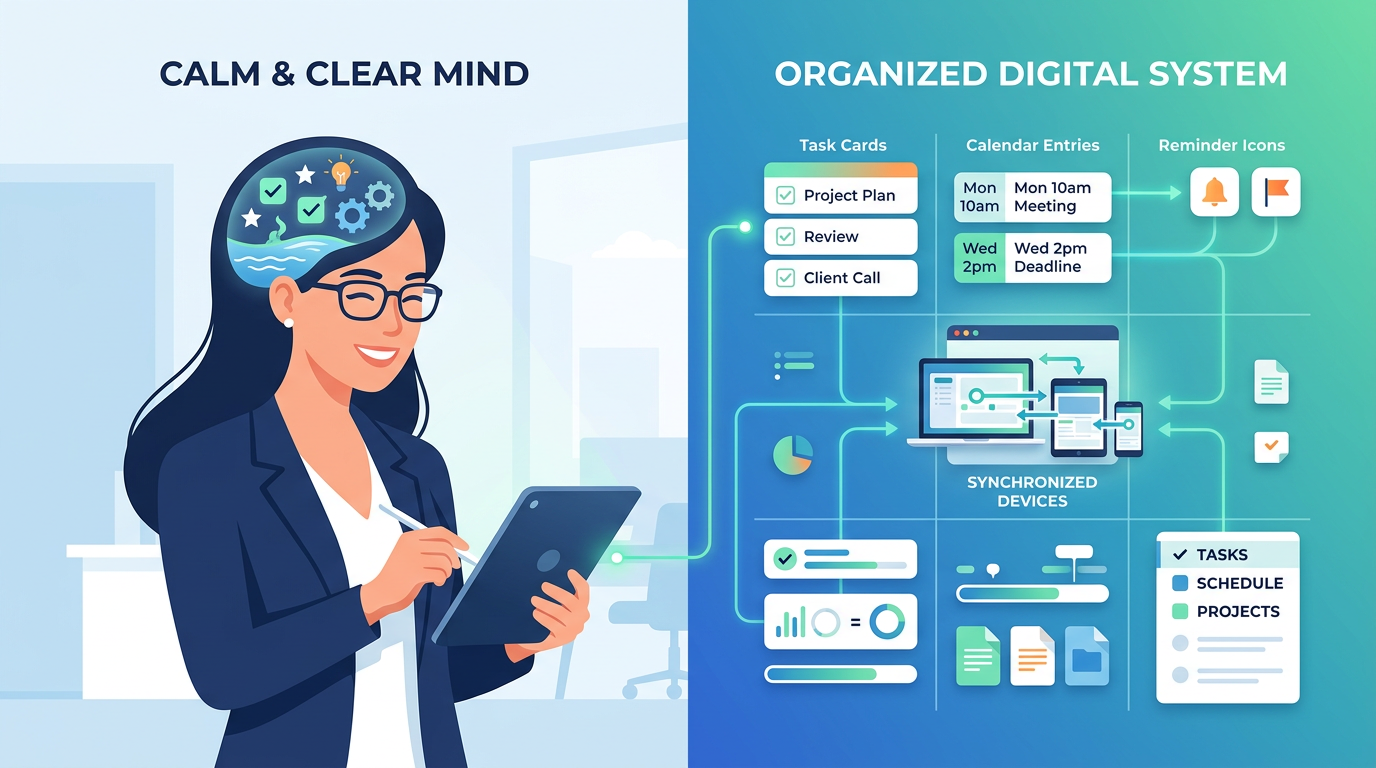
The Universal Problem
Every person, no matter how intelligent or capable, has forgotten something important.
An email that needed a reply.
A meeting scheduled days ago.
A bill due tomorrow.
A task promised to someone.
For most people, these are occasional inconveniences. But when forgotten tasks start piling up, they create stress, missed opportunities, and broken trust.
Successful people seem different. They rarely forget what needs to be done.
But the truth is surprising.
Successful people don't have better memories.
They have better systems.
This article explores the psychology, philosophy, and technical systems that explain why successful people rarely forget tasks and how you can build the same advantage.
The Myth of the "Perfect Memory"
Most people assume highly successful individuals simply remember more.
But cognitive science shows something different.
Human working memory can only hold about 4–7 pieces of information at once. Beyond that, the brain begins dropping things.
Trying to remember everything is like trying to run a company using only your head instead of written records.
Even the smartest brain becomes overloaded.
Successful people understand this limitation early.
So they stop relying on memory.
Your Brain Is Designed to Think, Not Store
Philosophically, the brain works best when it is used for thinking, decision making, and creativity, not storage.
When your mind constantly tries to remember tasks, it creates something psychologists call cognitive load.
Your brain keeps background processes running like:
- Did I reply to that email?
- Did I book that ticket?
- Was there something I needed to send today?
Each unresolved task becomes a small open loop in your mind.
Over time, these loops create mental clutter.
This is why people often feel mentally exhausted even when they haven't done much work yet.
The problem isn't effort.
The problem is remembering too many things.
Order vs Chaos in the Mind
The human mind naturally drifts toward chaos when too many things compete for attention.
The philosopher Friedrich Nietzsche once wrote:
"You must have chaos within you to give birth to a dancing star."
Chaos fuels creativity.
But too much chaos destroys clarity.
Successful people understand this balance.
They allow their minds to remain creative and free - but they externalize structure into systems.
Instead of storing tasks in their heads, they move them into tools, reminders, and workflows.
This protects their mental energy.
Successful People Close Memory Loops Quickly
One key habit among highly productive people is simple:
They externalize tasks immediately.
Instead of trusting memory, they convert tasks into something external:
- A reminder
- A calendar entry
- A task list
- A note
- A system
The moment a task appears, it leaves their brain and enters a reliable system.
This creates psychological relief.
Their brain now knows:
"I don't need to remember this anymore."
The task is safe.
The Technical System Behind Task Memory
Behind every productive person is usually a structured workflow.
While tools vary, the architecture is surprisingly consistent.
1. Capture Everything
The first step is task capture.
Whenever something appears - a thought, idea, or responsibility - it is recorded immediately.
This could be:
- Reply to Rahul
- Renew domain subscription
- Send invoice
- Prepare meeting notes
The rule is simple:
If it matters, capture it.
Nothing important is allowed to float in memory.
2. Organize the Tasks
Once tasks are captured, they are organized into meaningful structures.
For example:
- Calendar → time-specific events
- Task list → actionable work
- Notes → reference information
- Projects → grouped tasks
This organization prevents chaos.
Instead of remembering everything, you only look at the relevant list at the right time.
3. Automate Reminders
The most powerful step is automation.
Successful people rarely depend on themselves to remember tasks.
They use systems that remind them.
Reminders convert memory into technology-assisted recall.
Instead of thinking:
"I must not forget this."
They think:
"My system will remind me."
That shift removes anxiety and improves reliability.
4. Review the System Regularly
Even the best systems fail without maintenance.
High performers frequently review their tasks.
Daily reviews help prioritize immediate work.
Weekly reviews help align tasks with larger goals.
This review cycle ensures that nothing quietly disappears.
The Hidden Cost of Forgotten Tasks
When a task is forgotten, the damage isn't always obvious.
But the consequences accumulate.
- Missed opportunities
- Delayed projects
- Broken promises
- Damaged reputation
Trust is built on reliability.
People who consistently remember commitments become dependable.
Dependable people become valuable.
And valuable people become successful.
The Rise of External Memory
Today, technology is pushing this idea even further.
Instead of simple reminders, we are entering the era of external memory systems.
Tools can now:
- Store everything you need to remember
- Track tasks automatically
- Connect reminders to conversations
- Organize knowledge across time
In a way, technology is becoming a second brain.
Not to replace human thinking, but to support it.
The Real Secret
The real secret isn't intelligence.
It isn't motivation.
It isn't discipline.
It is reducing cognitive load through systems.
When your brain stops trying to remember everything, it gains the freedom to do what it does best:
- Think
- Create
- Solve problems
- Make decisions
Successful people don't carry tasks in their minds.
They carry them in reliable systems.
And that simple shift changes everything.
Your External Memory Starts Here
Most productivity tools require installing new apps, creating accounts, and building complex habits.
But there's a simpler approach.
What if your external memory lived where you already spend your time?
Since most people already open WhatsApp many times a day, your external memory can live right there.
Whacha acts as your second brain, capturing everything you need to remember and reminding you at exactly the right time.
No new app. No complicated workflows.
Just a simple conversation with your external memory.
Try Whacha for free and experience what it feels like to never forget again.